
Wild dwarf hamsters exhibit the following characteristics and habits:
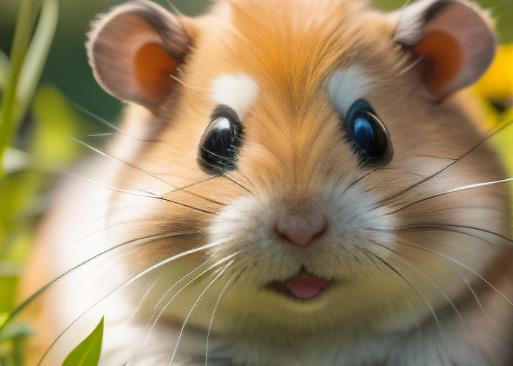
Habitat
Dwarf hamsters primarily inhabit sparse-vegetation sand dune areas in grasslands, semi-deserts, and dry steppes, as well as shrublands between sand dunes, along the banks of dry riverbeds, and in farmlands. These regions have sparse vegetation and soft soil, which facilitate their burrowing and foraging activities.
Short-tailed dwarf hamsters (e.g., Campbell's dwarf hamsters): Distributed in China and Siberia, they prefer semi-desert grasslands and the edges of forest-steppes.
Desert dwarf hamsters (e.g., Roborovski dwarf hamsters): Adapted to desert and semi-desert environments, and even inhabit loose sandstone areas at high altitudes (1,200-1,500 meters).
Living Habits
Nocturnality
Dwarf hamsters are nocturnal animals, being most active from dusk to dawn. During the day, they mostly hide in burrows to rest.
Burrowing Behavior
They construct nests by digging underground tunnels; some species occupy gerbil burrows instead of digging their own. The burrow structure is simple, with a rounded, enlarged nesting chamber at the end, lined with soft materials such as dry leaves.
Food Hoarding Instinct
They have a strong instinct to hoard food. Using their cheek pouches, they carry food (such as plant seeds, roots, and insects) back to their burrows for storage to cope with food shortages.
Activity Range
Their activity range is relatively small, usually not exceeding 50 meters from the burrow entrance. This minimizes energy consumption and reduces the risk of exposure to predators.
Dietary Characteristics
Plant-Based Diet as the Mainstay
They mainly feed on plant seeds, roots, leaves, and fruits. In winter, they collect nuts to store fat reserves.
Insect Supplementation
They prey on small insects like beetles to obtain animal protein. Particularly during the breeding season or when plant-based food is scarce, their intake of insects increases.
Adaptive Feeding
When plant-based food is scarce, desert dwarf hamsters can increase the proportion of animal-based food to nearly 50%, demonstrating a high degree of dietary flexibility.
Defense Mechanisms
Camouflage Ability
In winter, the fur color of some dwarf hamsters (e.g., short-tailed dwarf hamsters) turns white, blending with the snow to avoid predation by natural enemies.
Quick Reaction
They rely on their agility and short-distance sprinting ability to quickly escape danger.
Burrow Shelter
They use complex burrow systems to hide their whereabouts, reducing the risk of being preyed upon.
Social Behavior
Solitary Lifestyle
Wild dwarf hamsters are mostly solitary, only living together briefly during the breeding season. They have a strong sense of territoriality, and encounters between conspecifics can easily lead to fights.
Scent Marking
They secrete pheromones through scent glands located near the cheeks, behind the ears, and around the genitals to mark territories and paths. This helps with navigation and locating resources.